


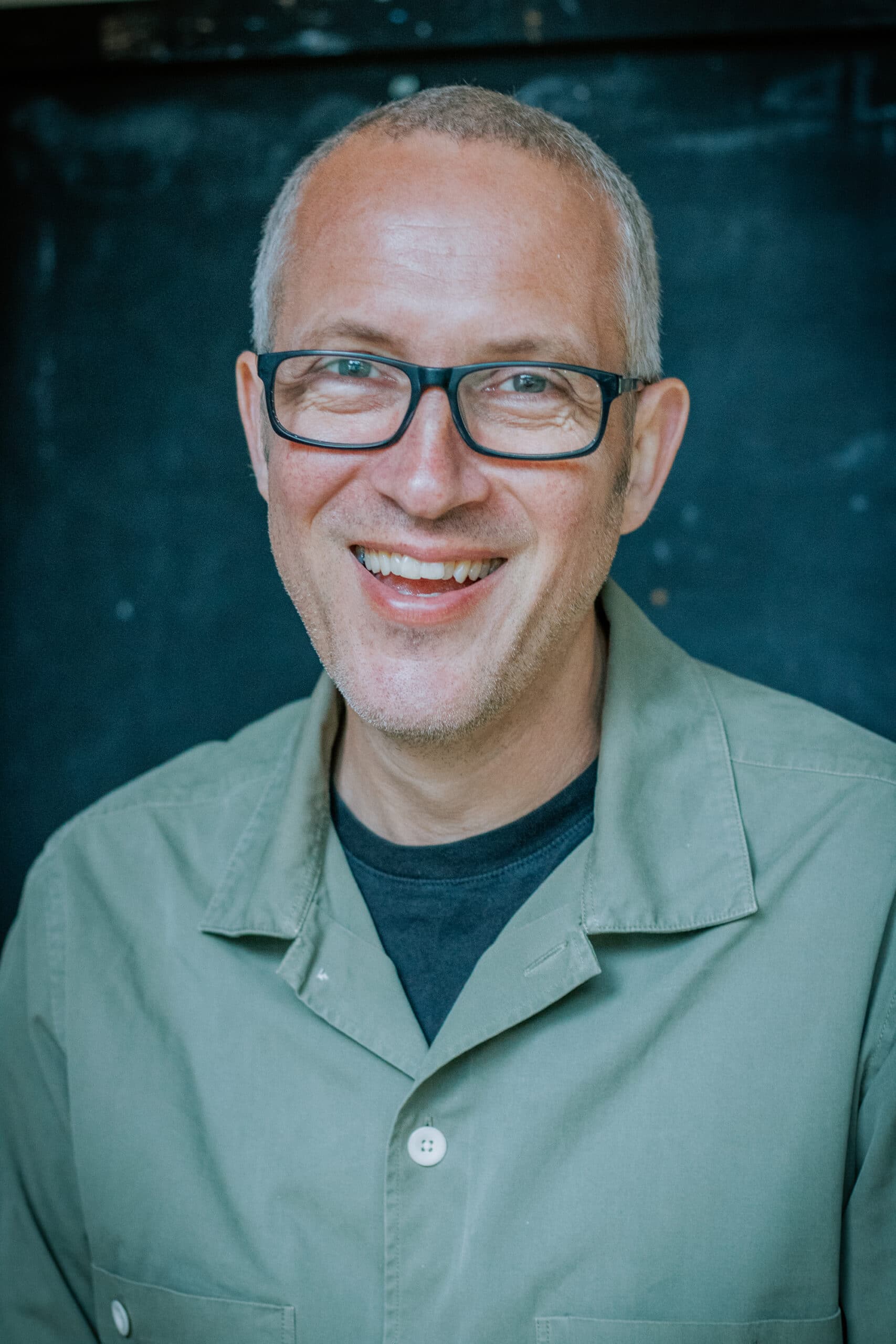
Professor of Actor Musicianship Head of Theatre for Young Audiences Centre
Read their profile Professor of Actor Musicianship Head of Theatre for Young Audiences Centre
Professor Jeremy Harrison is an artist, researcher and teacher whose work explores the intersections between music and theatre. His early career, as one of the UK’s leading actor-musicians, underpins a body of work that has seen him develop a training methodology and practice that encourages the integration of music, body, instrument and voice.
Read their full profileWhy choose this programme?
Where the discipline was shaped
The specialism is led by Professor Jeremy Harrison, who shaped actor-musicianship as a formal training discipline in the UK and internationally. His book Actor-Musicianship remains the seminal text in the field, and you'll study with the person who wrote it.
Music as a way of making theatre
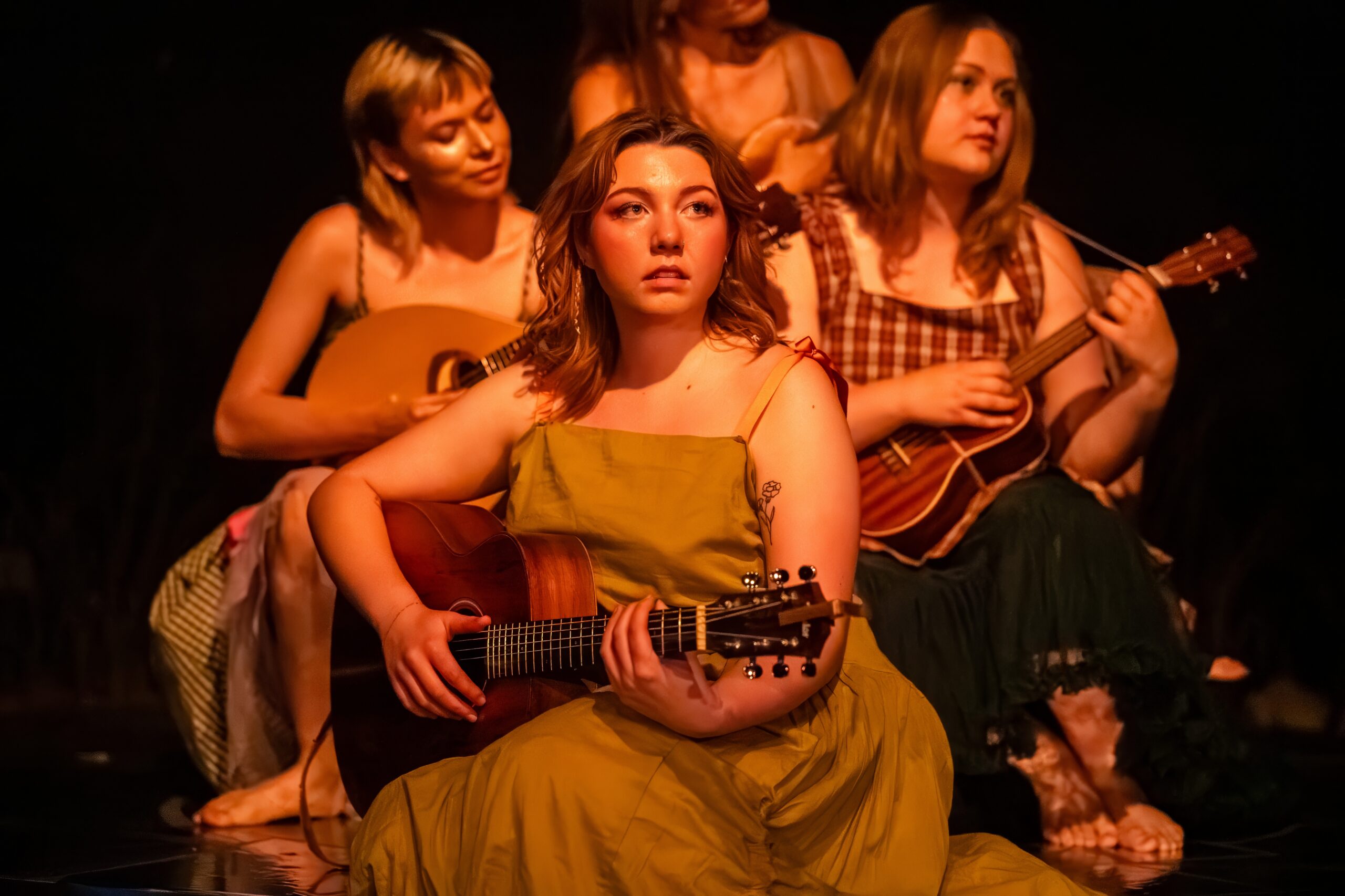
Underpinned by ideas of musicality, the specialism explores the many ways music and theatre can interrelate and inform one another. You'll integrate live music-making into contemporary performance across a range of approaches and contexts, so that musical and theatrical choices shape each other.
A radical, popular tradition
Actor-musicianship has its roots in community and popular theatre traditions. The specialism builds on that radical legacy, supporting you to make work that responds to people, place and space.
Far beyond musical theatre
Here actor-musicianship is a dynamic, multi-disciplinary approach to theatre-making in its own right. Musical theatre is one place it leads, alongside ensemble storytelling, devised work and experimental performance.
Make the work as well as play it
You'll move between creating, collaborating and performing, using practice research to investigate your ideas and develop an independent artistic voice, with the confidence to initiate work of your own.
Part of a wider network
Visiting practitioners and the College's actor-musicianship network across the UK and internationally show you the many directions music-led performance is taking, and give you the start of the professional relationships you'll need.
What you'll study
Whether you are an experienced actor-musician or looking to extend your creative practice, this pathway offers the opportunity to challenge familiar approaches, experiment with new forms and discover the possibilities of music-led performance.
Through ensemble practice, practical experimentation and critical reflection, you’ll investigate how instruments, voice, movement and acting work together to generate original performance. Teaching is practice-based, and the studio is where your research happens.
A specialism within the Performance MA/MFA
Actor Musicianship is one of five specialisms within Rose Bruford College’s Performance MA/MFA, a programme for versatile artists working across contemporary performance. You’ll develop focused expertise in music-led performance while drawing on the wider learning, resources and interdisciplinary conversation of the whole programme.
For more information visit the Performance MA/MFA web page.
MA or MFA?
The MA runs for 13 months full-time or two years part-time, and culminates in an independent Practice Research Project.
The MFA runs for 24 months full-time or four years part-time. You’ll share your first year with MA students, taking an Advanced Research Project (in place of the Practice Research Project) then carry that project into a second year dedicated to advancing your artistic practice and research.
The Shape of the Year
You can study full time or part time, and the year is organised in three terms. Full-time teaching is concentrated into approximately 3 in-person studio days per week – with optional additional days with other MA/MFA Performance specialisms. Part-time study spreads the same modules across a longer period. You can mix specialisms (e.g. Actor-Musicianship and Queer Performance), but completing both Actor-Musicianship modules gives you the specialism in your award title.
Develop Your Creative Practice
Bring your own artistic questions into the studio. Experiment with different approaches to combining music and performance, connecting making, thinking and research to test ideas and reflect on your discoveries. Develop the ability to articulate the relationship between your creative choices and the work you produce, building a practice that is both exploratory and purposeful.
Learn Across Disciplines
You’ll share modules with artists from across the Performance MA/MFA. Work with students studying the Theatre for Children and Young People specialism in particular opens up music, movement and sensory approaches to performance for young audiences, and every encounter with another discipline is a chance to rethink how music-led work is made.
Access by Design
Access is built into the programme from the start. Assessments offer choices in form and format, so you can show your learning in ways that suit how you think and make, and that attentiveness runs through the design of the whole programme.
Modules
You’ll engage with key methodologies of performance-making alongside theoretical frameworks, developing your work as a critically-engaged maker and practice researcher. We understand practice-based research as central to postgraduate study, where research may be embodied, written, or performed in multiple forms.
Alongside these Core Modules, the Specialism Modules offer a deep dive into specific fields and disciplines of practice.
Module 1
- Actor Musicianship: Approaches to Performance
Module 2
- Hybrid Narratives: Actor Musicianship in Performance
Core Module
- Practice Research Studio
Core Module
- Practice Research Project (MA only)
MFA
What the MFA Year Offers
- A creative laboratory where students shape their professional identity and explore bold new approaches to performance.
- Opportunities to combine independent practice-based research with placements at leading arts organisations.
- Direct engagement with the urgent issues, ideas, and debates shaping contemporary performing arts.
Collaboration and Community
- Work with artists, scholars, curators, and activists across theatre, live art, museums, galleries, and other cultural settings.
- Develop ambitious performance projects with the support of academic mentors.
- Take part in research events and networking sessions, contributing to Rose Bruford College’s dynamic postgraduate community.
Core Focus
- Interdisciplinary and collaborative approaches, centred on emerging theatrical and performative forms.
- Practice-based workshops designed to generate ideas for research and imagine new futures for performance.
- Exploration of:
Creative documentation and archiving
Performance’s role within communities
Art as a catalyst for social change
Critical Perspectives
- Situate contemporary practice within:
- Histories of key venues and festivals
- The relationship between artistic and political agendas
- The impact of cultural policy in the UK and internationally
- Use theory as a practical framework, linking artistic work to its political, cultural, and historical contexts.
Graduate Outcomes
By the end of the MFA, students will:
- Develop innovative, forward-looking visions for their chosen field.
- Position their work within broader cultural and historical currents.
- Be equipped with the skills and perspectives to thrive as artists, researchers, and cultural leaders.
More about the programme
Who You’ll Learn From
Professor Jeremy Harrison leads the specialism and is Professor of Actor Musicianship and Head of the Theatre for Young Audiences Centre. His book Actor-Musicianship (Bloomsbury Methuen Drama, 2016) is the seminal text in the field. His work has helped establish actor-musicianship as a formal discipline, and Equity now recognises actor-musician as a distinct category of performer.
Develop your understanding with academics and practising artists who bring specialist knowledge and professional experience into the learning environment. Through practical workshops, discussions and tutorials, connect contemporary actor-musicianship practice with critical inquiry. Learn from different perspectives as you refine your artistic, technical and research skills.
Connect with Audiences and the Profession
You’ll create and present music-centred work in productions on campus, and explore the contexts in which actor-musicians work, from established theatre companies and touring productions to independent performance.
Make Work in a Creative Environment
Develop your practice in an environment designed around performance, collaboration and experimentation. Rose Bruford College’s Sidcup campus brings together four fully equipped theatres, an outdoor performance space and state-of-the-art production studios, all centred around the Grade II listed Lamorbey House.
With dedicated spaces for rehearsal, performance and production, you’ll have opportunities to explore the relationship between music and theatre in practice. Work collaboratively, experiment with different performance configurations and develop ideas from initial exploration through to presentation.
Just 25 minutes by train from central London, the campus combines a focused creative environment with access to one of the world’s most vibrant performing arts communities. You’ll have the space to develop your practice while remaining connected to the wider professional landscape.
Shape the Future of Actor-Musicianship
Actor-musicianship is a live and living art form. You’ll experiment with new ways of bringing your skills together and make work that reflects your own ambitions, contributing to where the practice goes next.
Where Could This Take You?
Develop the versatility, creative confidence and collaborative skills to pursue opportunities across performance and theatre-making.
Graduates have worked in national touring productions, regional theatres, London’s West End, theatre for young audiences and independent performance companies. You could develop your own performance projects, collaborate with established companies or explore opportunities across different areas of the performing arts.
The course can also provide a foundation for further academic enquiry, allowing you to extend your research interests and continue developing your practice.
How to Join
For entry requirements, interviews and tuition fees, please visit the Performance MA/MFA web page
Institution code: not applicable
Course code: not applicable
Course Summary
Duration
Full time - 13 month MA, 2 year MFA, Part time - 2 year MA, 4 year MFA
Mode of study
Full time and part time
Start date
October 2027
Course Type
Postgraduate Course