


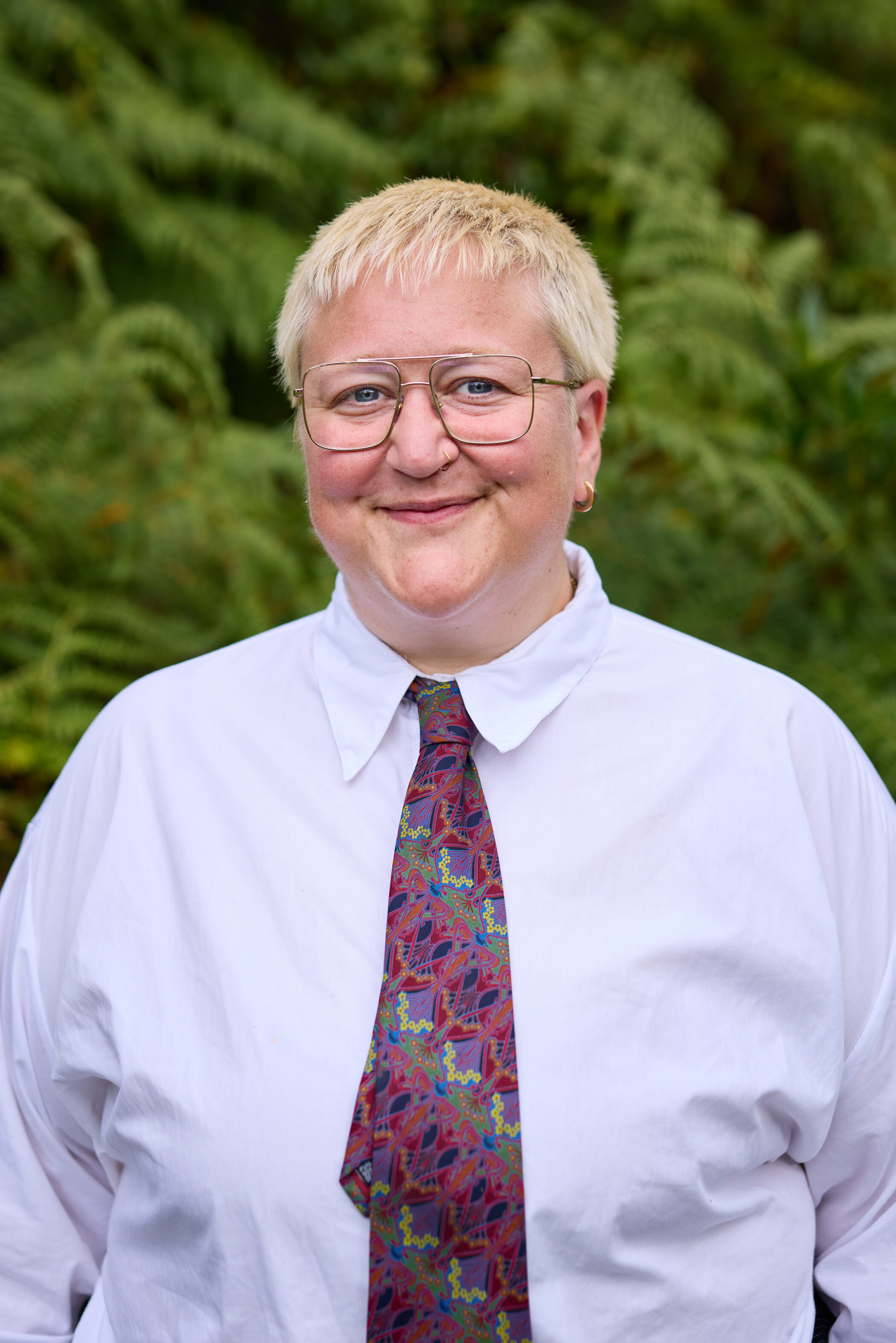
Programme Director for MA Performance (Queer Performance and Curating) and BA Theatre & Social Change
Read their profile Programme Director for MA Performance (Queer Performance and Curating) and BA Theatre & Social Change
Read their full profileWhy choose this programme?
Curating as a creative practice
Explore curation as an artistic practice and a form of cultural activism. Consider how curatorial choices can challenge conventions, open up new perspectives and shape relationships between artists, audiences and the places where performance happens.
Take ideas from development to live event
You’ll follow the full journey of artistic work, from the sparking of ideas, commissioning and development to programming and presentation. Fundraising, venue management, artist liaison and audience development are taught with the same creativity as the ideas they serve, and you’ll have opportunities to put your ideas into practice by curating and producing live events.
A placement shaped by your ambitions
A work placement connects your study with professional practice, arranged around where you want to go next in producing, programming or cultural leadership. It gives you a working view of the sector as it is, with its pressures and its possibilities.
Beyond the main stage
Explore the breadth of contemporary performance across theatres, festivals, independent venues, nightlife, schools and community projects. Examine how different contexts, audiences and creative environments influence the work being presented and the decisions behind it.
Access and ethics at the centre
Question who performance is for, who gets to participate and whose voices are represented. Engage with important debates around access, inclusion, ethics and social responsibility as you develop your own curatorial values and approach.
Collaborate across creative disciplines
Work alongside artists and researchers from across the Performance MA/MFA. Exchange ideas, encounter different creative processes and discover how collaboration across disciplines can challenge your thinking and inform the work you develop and present.
What you'll study
Whether you want to work within established arts organisations or build something of your own, the specialism brings practical skill and critical inquiry together. You’ll examine how performance is conceived, developed, presented and experienced, and how artists, organisations, curators and audiences shape performance cultures between them.
You’ll draw on the histories of international festivals, live art and nightlife cultures, the scenes that have repeatedly changed how performance meets its publics, alongside the institutions that sustain work over the long term.
A specialism within the Performance MA/MFA
Curating is one of five specialisms within Rose Bruford College’s Performance MA/MFA. You’ll develop your curatorial practice alongside artists and researchers working across contemporary performance, and come to see the sector, and the possibilities within it, from more than one side.
Visit the Performance MA/MFA web page for more information.
MA or MFA?
The MA runs for 13 months full-time or two years part-time, and culminates in an independent Practice Research Project.
The MFA runs for 24 months full-time or four years part-time. You’ll share your first year with MA students, taking an Advanced Research Project (in place of the Practice Research Project) then carry that project into a second year dedicated to advancing your artistic practice and research.
The Shape of the Year
You can study full time or part time, and the year is organised in three terms. Full-time teaching is concentrated into 2 in-person studio days per week – with optional additional days with other MA/MFA Performance modules. Part-time study spreads the same modules across a longer period. You can mix specialisms (e.g. Curating and Devising Political Performance), but completing both Curating modules gives you the specialism in your award title.
The Curating Specialism
You’ll follow artistic work across its whole life, from early development and commissioning to presentation, audience engagement and what lingers after the event. Along the way you’ll weigh artistic ambition against practical delivery, build your understanding of producing, programming and artist development, and consider what it means to hold a programme and the artists and audiences within it.
Develop Your Creative Practice
What work do you want to champion – and why? Explore curation as a form of creative research, bringing making, thinking and writing together. Develop ways to document and evaluate your process, connect your decisions with critical ideas and articulate the values and perspectives that inform your practice.
Learn Across Disciplines
Exchange perspectives with artists and researchers across the Performance MA/MFA. Gain insight into the processes behind different forms of contemporary performance and consider how these encounters can inform the ways you develop, frame and present artistic work.
Access by Design
Access is built into the programme from the start, which matters for curators whose work is about opening doors for others. Assessments offer choices in form and format, so you can show your learning in ways that suit how you think and work, and that attentiveness runs through the design of the whole programme.
Modules
You’ll engage with key methodologies of performance-making alongside theoretical frameworks, developing your work as a critically-engaged maker and practice researcher.
Module 1
- Curating Performance
Module 2
- Creative Ecologies
Core Module
- Practice Research Studio
Core Module
- Practice Research Project (MA only)
MFA
What the MFA Year Offers
- A creative laboratory where students shape their professional identity and explore bold new approaches to performance.
- Opportunities to combine independent practice-based research with placements at leading arts organisations.
- Direct engagement with the urgent issues, ideas, and debates shaping contemporary performing arts.
Collaboration and Community
- Work with artists, scholars, curators, and activists across theatre, live art, museums, galleries, and other cultural settings.
- Develop ambitious performance projects with the support of academic mentors.
- Take part in research events and networking sessions, contributing to Rose Bruford College’s dynamic postgraduate community.
Core Focus
- Interdisciplinary and collaborative approaches, centred on emerging theatrical and performative forms.
- Practice-based workshops designed to generate ideas for research and imagine new futures for performance.
- Exploration of:
Creative documentation and archiving
Performance’s role within communities
Art as a catalyst for social change
Critical Perspectives
- Situate contemporary practice within:
- Histories of key venues and festivals
- The relationship between artistic and political agendas
- The impact of cultural policy in the UK and internationally
- Use theory as a practical framework, linking artistic work to its political, cultural, and historical contexts.
Graduate Outcomes
By the end of the MFA, students will:
- Develop innovative, forward-looking visions for their chosen field.
- Position their work within broader cultural and historical currents.
- Be equipped with the skills and perspectives to thrive as artists, researchers, and cultural leaders.
Who You'll Learn From
You’ll be taught by specialist staff and researchers from across the College, whose work explores different approaches to staging performance in a range of contexts, alongside practitioners currently working in arts organisations in London and across the UK.
Academic staff include:
Dr Phoebe Patey-Ferguson leads the specialism. Trained as an international festival and queer nightlife producer, they have worked with the London International Festival of Theatre (LIFT) and In Between Time (IBT), programmed and managed the queer arts venue VFD and produced the Femmetopia festival to present over 100 feminist and queer artists. They also worked as an international touring producer, an access-focused artist producer, and self-producing artist. Their book on LIFT (Bloomsbury, 2027) is the first full-length study of the festival. They co-chair the board of queer arts producer’s Duckie, collaborate on public engagement events with organisations such as the Tate, and are working with 101 Outdoor Arts on queer work in public space.
Professor Jeremy Harrison is Head of Rose Bruford’s Theatre for Young Audiences Centre and Lead Artist for Kent County Council’s Playground, an Arts Council England National Portfolio Organisation. There he designs and co-leads early years and SEND-inclusive work with a team of 20 artists, reaching thousands of families a year. He was Musical Director and Composer of Oily Cart’s award-winning Space to Be, which toured into the homes of families with disabled young people.
Dr Joe Parslow is Head of Research and Postgraduate Provision. They have produced drag and cabaret across London since 2013, including opening Her Upstairs, the award-winning LGBTQ+ venue in Camden. With Me The Drag Queen they created Not Another Drag Competition, which has become a route for early-career performers to the Royal Court, Southbank Centre and the BBC and work to support Ham it Up Productions. Their book Their Majesty (Routledge, 2024) explores how London’s drag scene sustains its communities.
Professor Brian Lobel is a performer, teacher and curator whose work centres on bodies, illness, health, disability and lived experience. His curatorial projects include Cruising for Art, HORA/Ruach, BINGE and Purge, and he co-founded The Sick of the Fringe. He works across the arts and health sectors with patient groups, doctors and nurses, and holds a 2026 Churchill Fellowship on ritual and cancer care.
Marisa Carnesky is a live artist, showwoman and producer whose company, Carnesky Productions, makes artist-led spectacle on a large scale. Carnesky’s Showwomxn Sideshow Spectacular brought 33 women and non-binary performers to Brighton Festival in 2024, and through her Finishing School and Radical Cabaret School she has trained and showcased new cabaret artists. Her awards include an Olivier for Duckie’s C’est Barbican.
More about the programme
Learn Through Professional Practice
Take your learning beyond the classroom through a work placement tailored to your interests, alongside opportunities to curate and produce live events. Develop your professional understanding, build relationships and reflect on how creative decisions respond to the needs of artists, audiences and organisations.
The College has had connections for placements with diverse London arts organisations such as Live Art Development Agency (LADA), The Royal Court, Bush Theatre, Future Ritual, Tramshed, Camden People’s Theatre, Old Diorama Arts Centre, London International Festival of Theatre (LIFT), Artsadmin, The Yard Theatre, London Bubble among many others.
Connect with Audiences and the Profession
Consider how performance can reach, engage and resonate with different communities. Explore approaches to participation and audience development, and examine the relationships that sustain artistic work across established venues, festivals and independent contexts.
Make Work in a Creative Environment
Study in a postgraduate environment designed around making, experimentation and collaboration. Rose Bruford College’s Sidcup campus brings together four fully equipped theatres, an outdoor performance space and state-of-the-art production studios, all centred around the Grade II listed Lamorbey House.
From developing ideas and testing creative approaches to presenting live work, you’ll have access to spaces that support a wide range of performance practices. The College’s specialist facilities provide an inspiring setting in which to exchange ideas, collaborate across disciplines and explore the possibilities of contemporary performance.
Just 25 minutes by train from central London, the campus offers the best of both worlds: access to one of the world’s most vibrant cultural centres, alongside the space and environment to think, create and grow.
Shape the Future of Curating
Question what gets presented, where it happens and who has the opportunity to take part. Explore how ethical, accessible and socially responsible approaches to curation can challenge existing structures and help shape a more inclusive and representative performance culture.
Where Could This Take You?
Many of the festivals and venues that changed performance in the UK began with people who decided to make the thing they wanted to see. The specialism develops the creative judgement, practical skills and entrepreneurial approach to initiate, develop and present work independently or within arts organisations.
Graduates can move into producing, programming, artist development, audience engagement and cultural leadership across the creative industries, in theatres, festivals, touring, independent arts organisations and community projects, or set up curatorial initiatives of their own.
Contact the Programme Director
If you would like to have an informal chat with Dr Phoebe Patey-Ferguson about the MA/MFA, please book a meet here.
How to Join
For entry requirements, interviews and tuition fees, please visit the Performance MA/MFA web page.
Institution code: not applicable
Course code: not applicable
Course Summary
Duration
Full time - 13 month MA, 24 month MFA, Part time - 2 year MA, 4 year MFA
Mode of study
Full time and part time
Start date
October 2027
Course Type
Postgraduate Course