


Professor of Actor Musicianship Head of Theatre for Young Audiences Centre
Read their profile Professor of Actor Musicianship Head of Theatre for Young Audiences Centre
Read their full profileWhy choose this programme?
Put young audiences at the heart of performance
Explore what it means to create work that is genuinely responsive to children and young people. Investigate participatory, immersive and co-creative approaches, considering how the age, needs, interests and perspectives of different audiences can shape artistic decisions and creative outcomes.
Explore an exciting range of performance practices
From devising and object theatre to immersive, participatory and multi-sensory approaches, discover how different creative forms can generate distinctive experiences for young audiences.
Work with diverse audiences
Explore the creative possibilities and considerations of working with children and young people at different stages of development. From babies and early years audiences to teenagers and children with special educational needs and disabilities (SEND), develop an understanding of how different audiences shape the creative process.
Learn from the people who built the field
The specialism is led by Professor Jeremy Harrison, who founded Rose Bruford's Theatre for Young Audiences Centre in 2011, and you'll be taught by leading artists, companies and thinkers in the field. Contributors have included Tim Webb, founder of Oily Cart and a pioneer of sensory theatre, and Tony Graham, former Artistic Director of London's Unicorn Theatre.
Music and movement
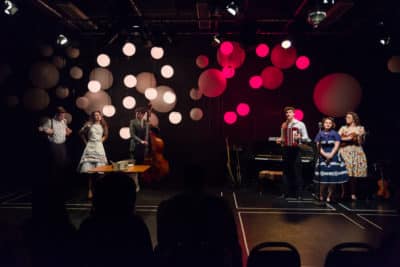
Work alongside artists from across the Performance MA/MFA, exchanging ideas and exploring different creative disciplines. In particular, you'll often share the studio with Actor-Musicianship students, combining live music, movement and sensory approaches to open up new possibilities for performance with young audiences.
A global alumni community
Graduates of our postgraduate training in this field work for leading UK companies for young audiences, and as teaching artists and facilitators on several continents.
Connect creative practice with research
Combine practical exploration with critical thinking and practice-based research. Investigate the ideas, theories and methodologies informing your work, developing the ability to evaluate your creative decisions, articulate your artistic approach and contribute new perspectives to the field.
What you'll study
At the heart of this specialism is the belief that children and young people are creative collaborators. Their perspectives, experiences and imaginations can transform how performance is conceived, created and experienced.
You’ll explore what happens when young audiences move from watching to taking part, and work through the artistic and ethical questions that come with making work shaped by and responsive to young people. Teaching is practice-based, and practical exploration and critical enquiry develop side-by-side.
A specialism within the Performance MA/MFA
Theatre for Children and Young People is one of five specialist areas within Rose Bruford College’s Performance MA/MFA, a programme for versatile artists working across contemporary performance. You’ll develop focused expertise in theatre for young audiences while drawing on the wider learning, resources and interdisciplinary conversation of the whole programme.
For more information visit the Performance MA/MFA web page.
MA or MFA?
The MA runs for 13 months full-time or two years part-time, and culminates in an independent Practice Research Project.
The MFA runs for 24 months full-time or four years part-time. You’ll share your first year with MA students, taking an Advanced Research Project (in place of the Practice Research Project) then carry that project into a second year dedicated to advancing your artistic practice and research.
The Shape of the Year
You can study full time or part time, and the year is organised in three terms. Full-time teaching is concentrated into 2 in-person studio days per week – with optional additional days with other MA/MFA Performance specialisms. Part-time study spreads the same modules across a longer period. You can mix specialisms (e.g. Theatre for Children and Young People and Queer Performance), but completing both TYCP modules gives you the specialism in your award title.
Develop Your Creative Practice
Explore a broad range of practical approaches to performance-making, developing the creative skills and critical understanding to work with different young audiences.
Experiment with different forms and methodologies, including:
- Devising and collaborative performance-making.
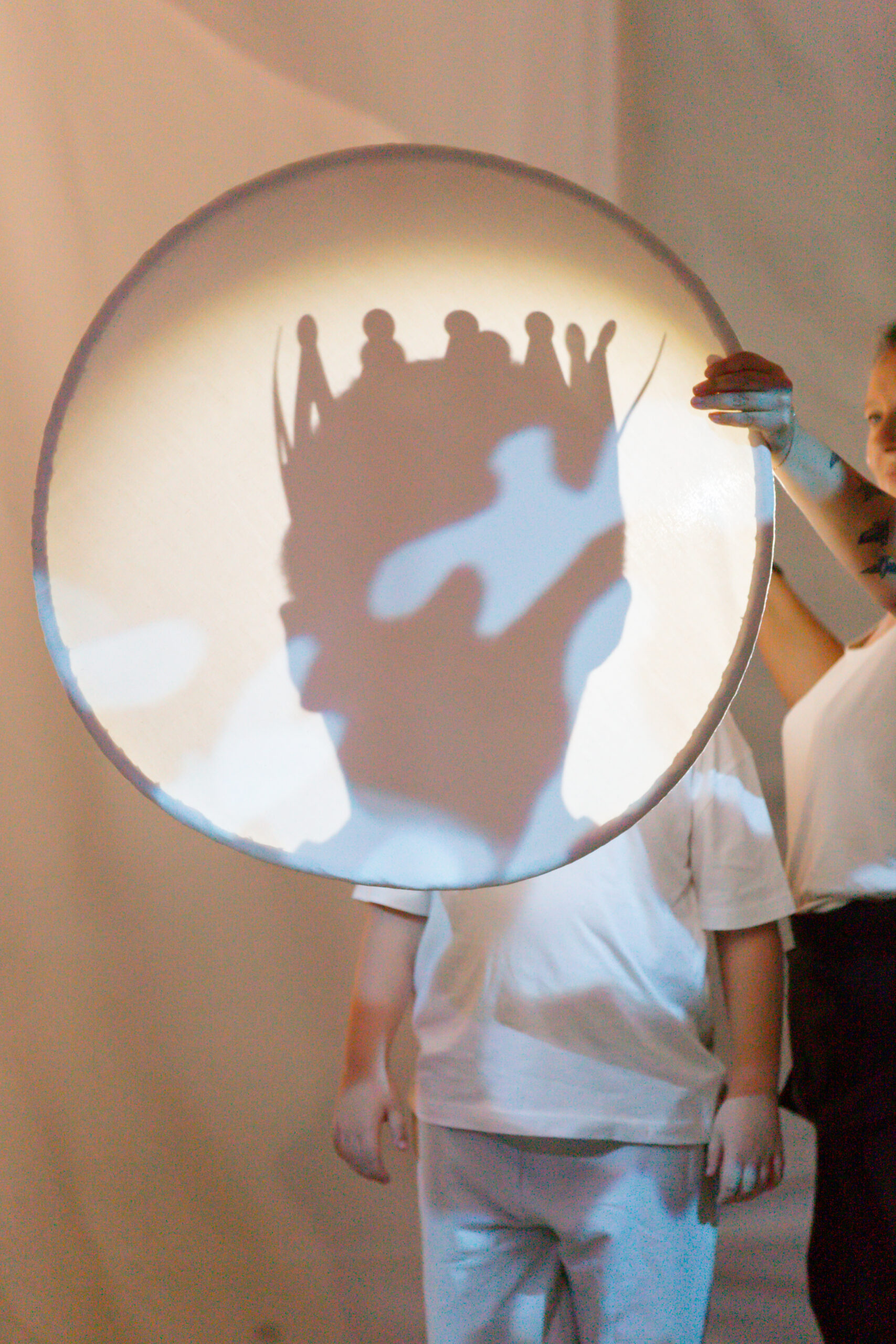
- Object theatre and the creative use of materials.
- Adaptation and reimagining existing texts and stories.
- Immersive and participatory performance.
- Multi-sensory approaches to performance.
- Performance for babies, early years and teenage audiences.
- Creative approaches to working with children and young people with complex needs and disabilities.
Throughout, you’ll consider the artistic, ethical and practical dimensions of making work for young audiences, so that what you make is imaginative, accessible and meaningful to the people it is for.
Learn Across Disciplines
You’ll share modules with artists from across the Performance MA/MFA. Collaboration with Actor-Musicianship students in particular lets you investigate how music, movement, sensory experience and participation can work together in performance for young audiences.
Access by Design
Access is built into the programme from the start, which matters in a field that works with audiences theatre has often left out. Assessments offer choices in form and format, so you can show your learning in ways that suit how you think and make, and that attentiveness runs through the design of the whole programme.
Modules
You’ll engage with key methodologies of performance-making alongside theoretical frameworks, developing your work as a critically-engaged maker and practice researcher.
Module 1
- Theatre for Children and Young Audiences: Approaches to Performance
Module 2
- For, By, With: Theatre for Children and Young Audiences in Performance
Core Module
- Practice Research Project (MA only)
Core Module
- Practice Research Studio
MFA
What the MFA Year Offers
- A creative laboratory where students shape their professional identity and explore bold new approaches to performance.
- Opportunities to combine independent practice-based research with placements at leading arts organisations.
- Direct engagement with the urgent issues, ideas, and debates shaping contemporary performing arts.
Collaboration and Community
- Work with artists, scholars, curators, and activists across theatre, live art, museums, galleries, and other cultural settings.
- Develop ambitious performance projects with the support of academic mentors.
- Take part in research events and networking sessions, contributing to Rose Bruford College’s dynamic postgraduate community.
Core Focus
- Interdisciplinary and collaborative approaches, centred on emerging theatrical and performative forms.
- Practice-based workshops designed to generate ideas for research and imagine new futures for performance.
- Exploration of:
Creative documentation and archiving
Performance’s role within communities
Art as a catalyst for social change
Critical Perspectives
- Situate contemporary practice within:
- Histories of key venues and festivals
- The relationship between artistic and political agendas
- The impact of cultural policy in the UK and internationally
- Use theory as a practical framework, linking artistic work to its political, cultural, and historical contexts.
Graduate Outcomes
By the end of the MFA, students will:
- Develop innovative, forward-looking visions for their chosen field.
- Position their work within broader cultural and historical currents.
- Be equipped with the skills and perspectives to thrive as artists, researchers, and cultural leaders.
More about the programme
Who You’ll Learn From:
Professor Jeremy Harrison leads the specialism. He founded Rose Bruford’s Theatre for Young Audiences Centre in 2011 and is a leading figure in the sector nationally and internationally. As Lead Artist for Kent County Council’s Playground, an Arts Council England National Portfolio Organisation, he designs and co-leads early years and SEND-inclusive work reaching thousands of families a year, and he was Musical Director and Composer of Oily Cart’s award-winning Space to Be.
Contributors to the course have included:
Tim Webb, founder of Oily Cart and a pioneer of sensory theatre.
Tony Graham, former Artistic Director of London’s Unicorn Theatre and an internationally renowned theatre-maker.
Sarah Argent, one of the UK’s leading makers of early years theatre.
Dalija Aćin Thelander, whose durational work for babies and children under four has been seen at festivals around the world.
Connect with the World of Theatre for Young Audiences
The TYA Centre connects your study with the companies and practitioners shaping the sector in the UK and internationally. You can see some of that work in a short documentary about Playground and a short film about the Sensory Project.
Make Work in a Creative Environment
Develop your ideas in an environment designed around performance, experimentation and collaboration. Rose Bruford College’s Sidcup campus brings together four fully equipped theatres, an outdoor performance space and specialist production studios, centred around the Grade II listed Lamorbey House.
These varied creative spaces offer opportunities to explore different performance configurations, experiment with materials and sensory approaches, and develop work for a range of audiences. From initial studio exploration to presenting original performance, you’ll have an environment that supports creative ambition and interdisciplinary practice.
Just over 25 minutes by train from central London, the campus offers access to a diverse cultural and professional landscape, alongside the space to concentrate on your practice and develop as an artist.
Shape Your Future Practice
You’ll learn to communicate your ideas, work with collaborators of every age, adapt your approach to different audiences and contexts, and reflect critically on what you make. You’ll leave with the confidence and practical knowledge to build a sustainable practice in theatre for young audiences.
Where Could This Take You?
Take your creative practice into Theatre for Young Audiences and the wider performing arts sector.
Graduates may go on to work as performers, theatre-makers, directors, facilitators, educators or creative practitioners. Potential opportunities include working with theatre companies, schools, arts organisations, festivals and community groups, creating participatory and immersive experiences, or developing independent performance projects.
Graduates from our postgraduate training in theatre for children and young people work across the sector in the UK and internationally, for companies including London’s Polka, Unicorn and Half Moon theatres, Little Angel, Oily Cart and The Herd.
Others work in children’s television and education, or as facilitators, workshop leaders, teaching artists and outreach workers, from Singapore to Colorado and Hull to Mumbai. The programme also provides a foundation for doctoral research.
How to Join
For entry requirements, interviews and tuition fees, please visit the Performance MA/MFA web page
Institution code: not applicable
Course code: not applicable
Course Summary
Duration
Full time - 13 month MA, 24 month MFA, Part time - 2 year MA, 4 year MFA
Mode of study
Full time and part time
Start date
October 2027
Course Type
Postgraduate Course